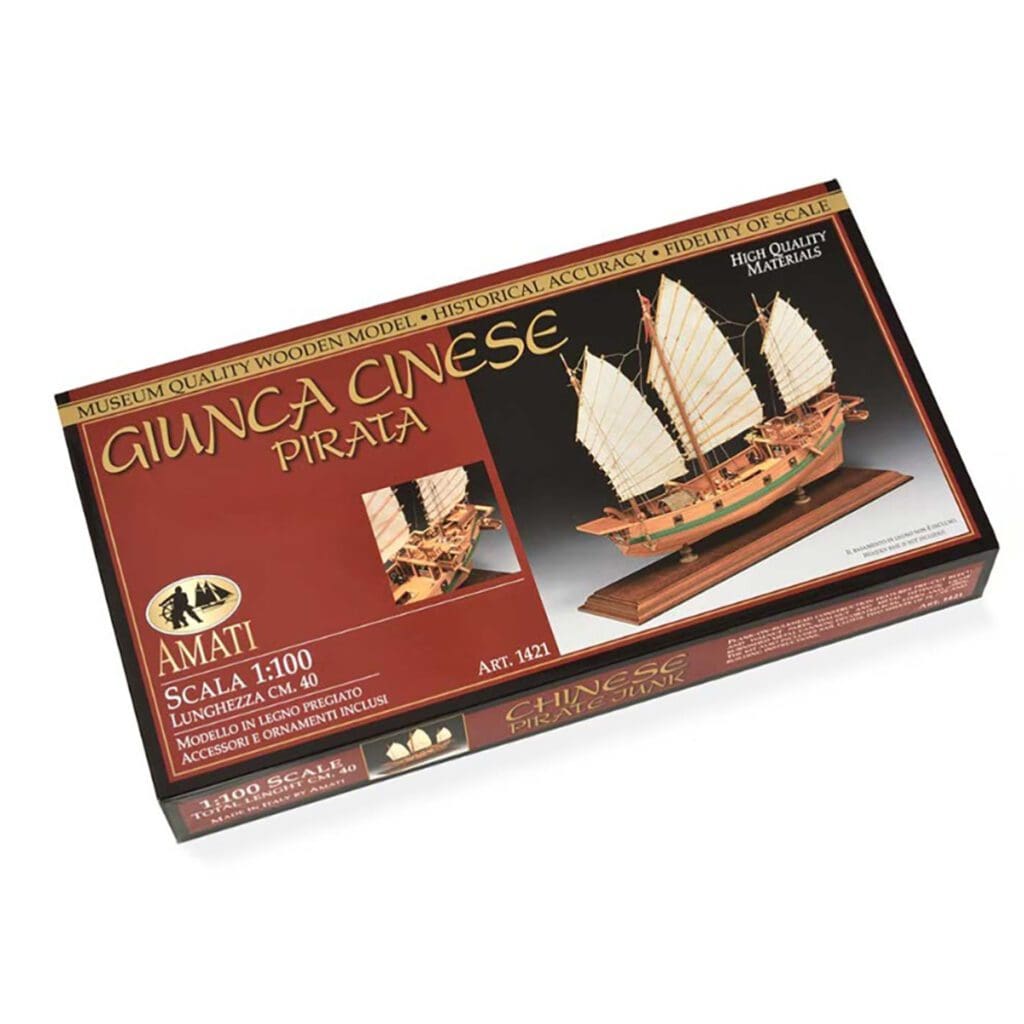
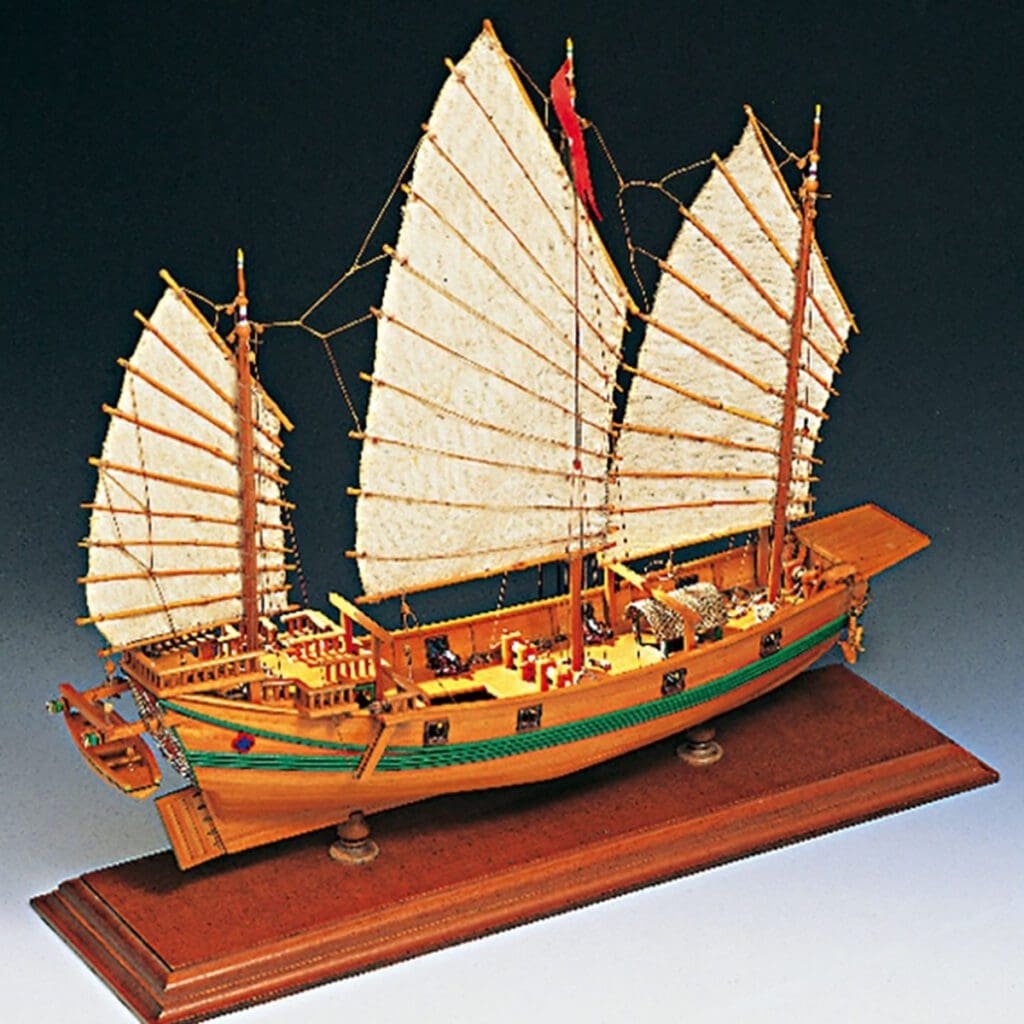
Chinese junk
– Amati Kit –
Dimensions: 40 cm (length)
Scale: 1:100
Materials: wood, metal, canvas
Difficulty: ***
Product description:
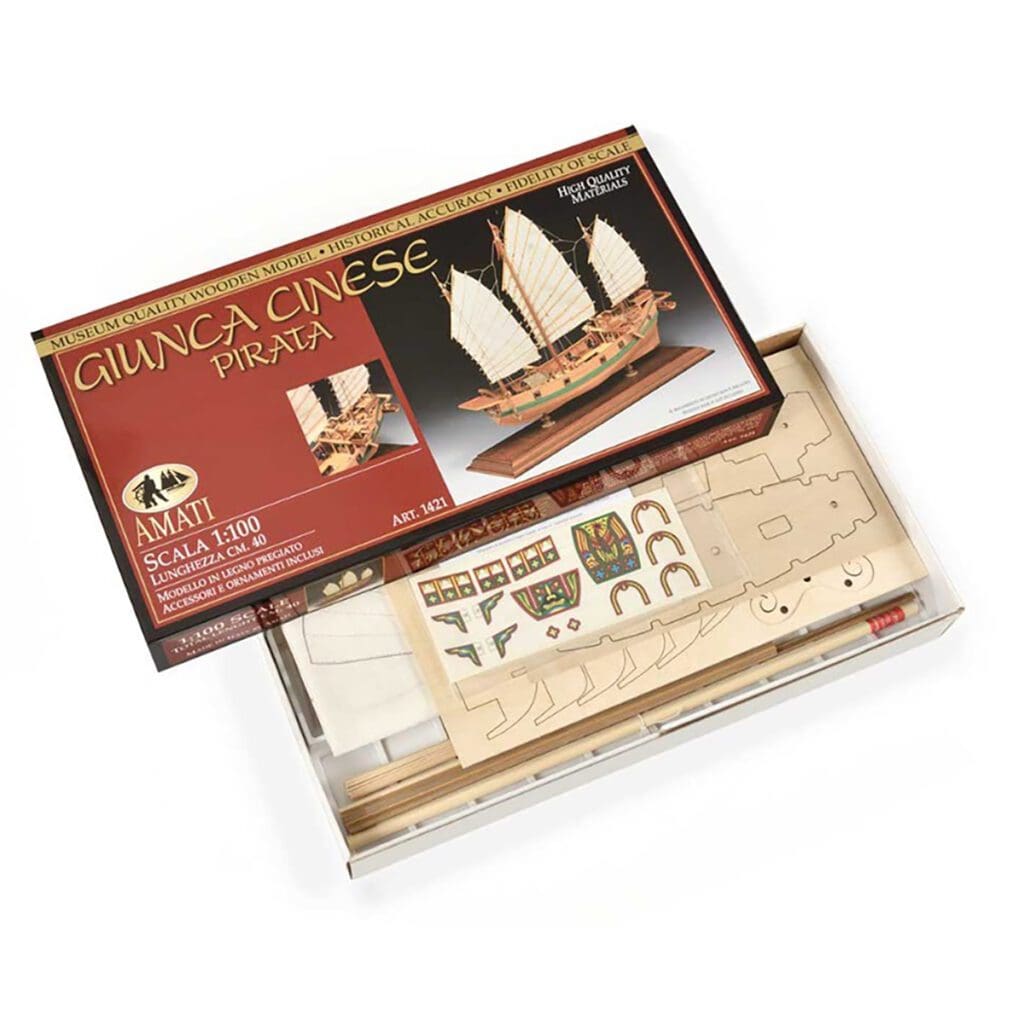
If you have already built a few models and are looking for a new challenge, this kit offers an opportunity to develop your ship modelling skills. The materials used in this wooden model largely match those of the original ship. The parts are assembled using glue and nails.
The plans supplied in the box guide you through construction step by step in English and Italian.
Laser-cut parts ensure accurate dimensions.
Paint and glue are not included.
Related products:
Plank-bending pliers
Electric plank bender
Pin pusher
Stand
Ship history
When clippers carried spices and tea through the South China Sea, the sight of a junk could be alarming: it was often impossible to know whether she was a merchant vessel or a pirate ship until the last moment. Junks dominated the rivers, harbours and seas of China and Hong Kong.
They were already sailing in open waters in the 5th–6th centuries AD. Until the 15th century, they were among the largest ships; accounts mention lengths of up to 180 metres. Transverse watertight bulkheads strengthened the hull. Fishing vessels could flood a compartment to keep their catch alive, while damage to one compartment did not flood the whole ship. Europe adopted this construction method in the 19th century.
Bamboo battens stiffened the sails, making them easier to climb and allowing them to be lowered vertically to reduce sail area. The sails did not require tensioning ropes and could be turned in any direction; aligning them with the wind stopped their driving force.
Chinese rudders had a large surface area. Smaller vessels used balanced rudders, and a pulley system allowed the rudder to be raised or lowered to suit the water depth.