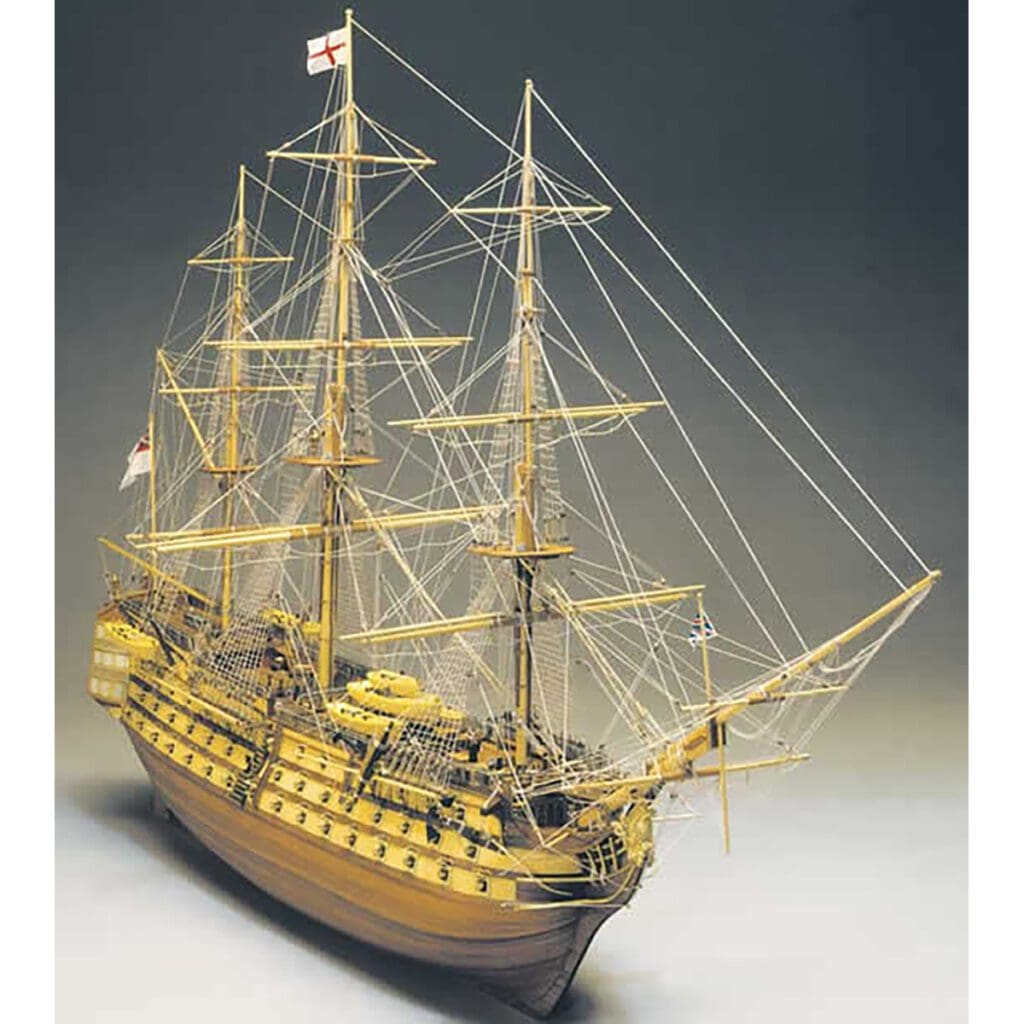
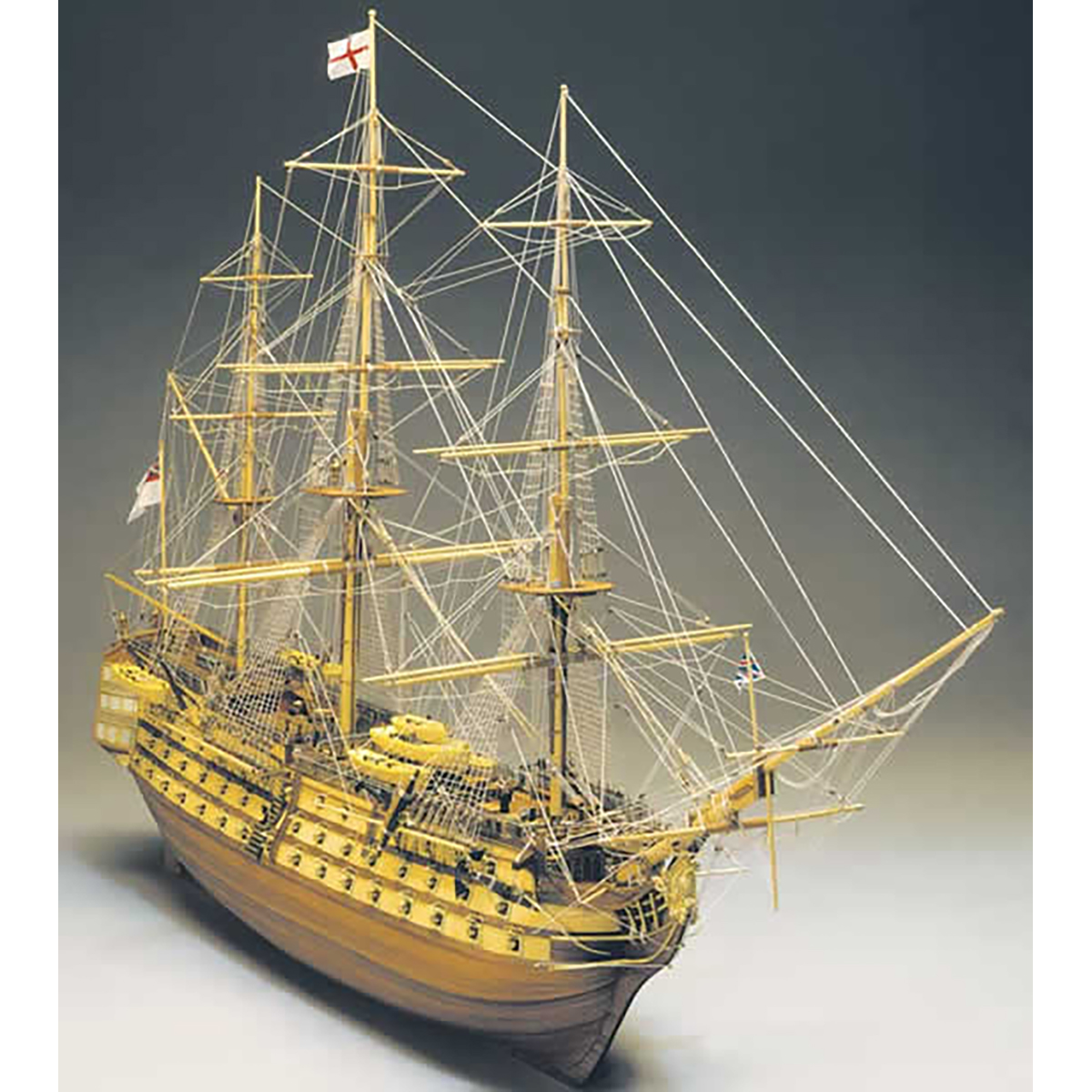
HMS Victory
- Dimensions: 107 cm (length) x 35 cm (width) x 73.5 cm (height)
- Scale: 1:98
- Materials: wood, metal, rope
- Difficulty:****
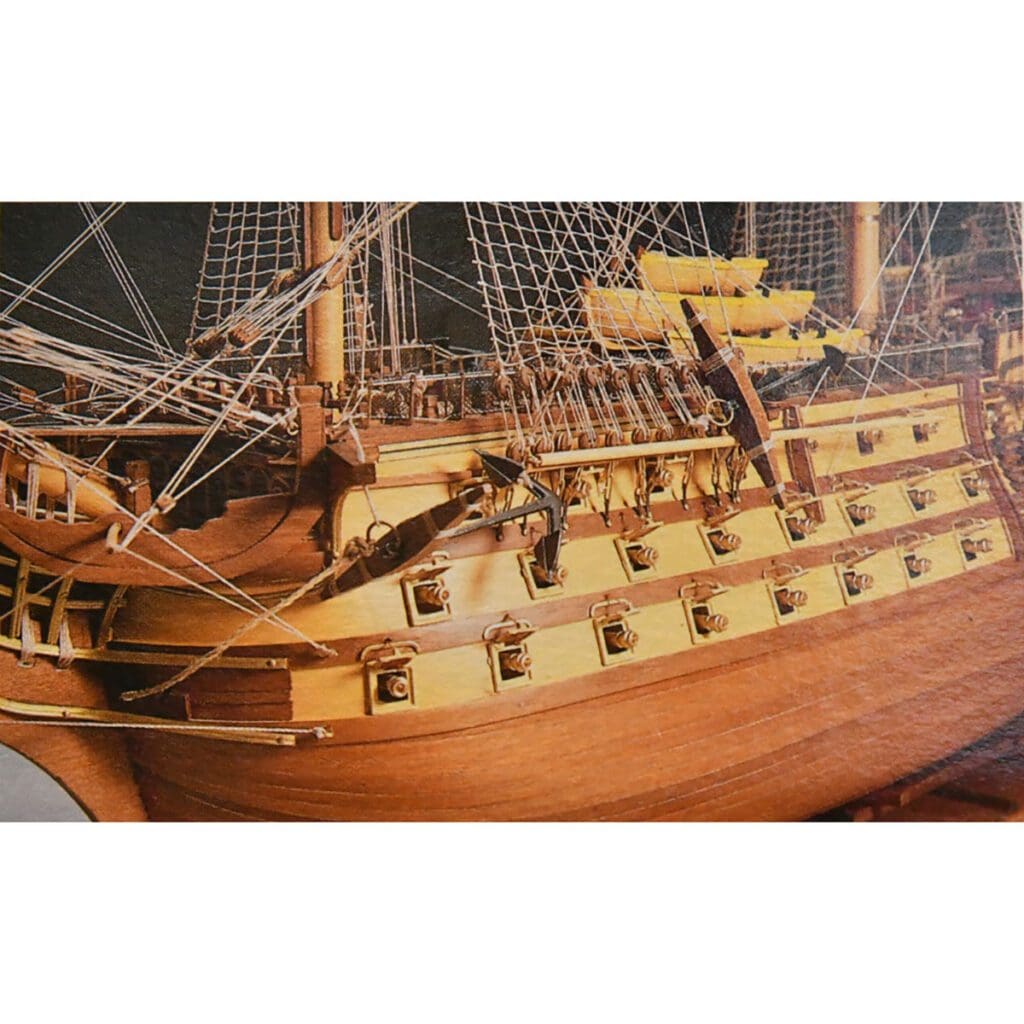
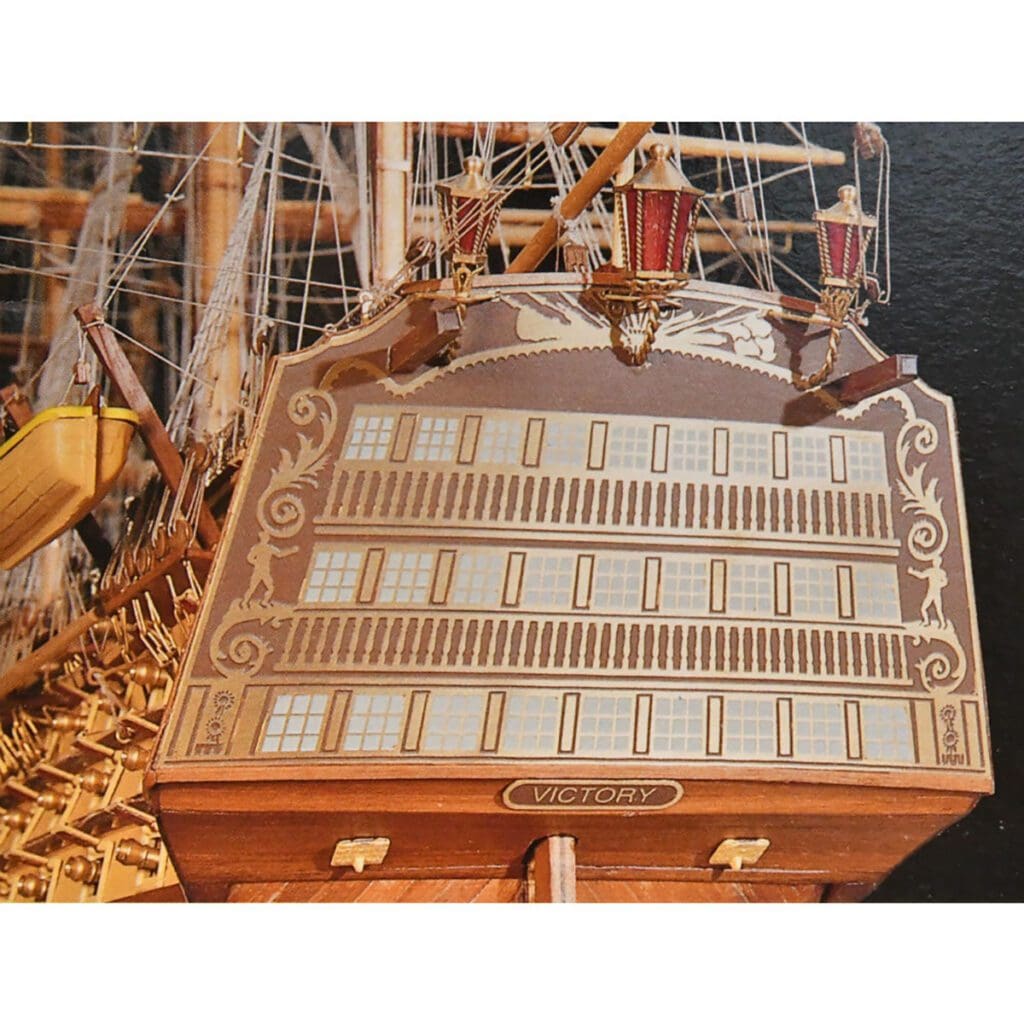
- If you have already built a few models and are looking for a new challenge, this kit offers an opportunity to develop your ship modelling skills. The materials used in this wooden model largely match those of the original ship. The parts are assembled using glue and nails.
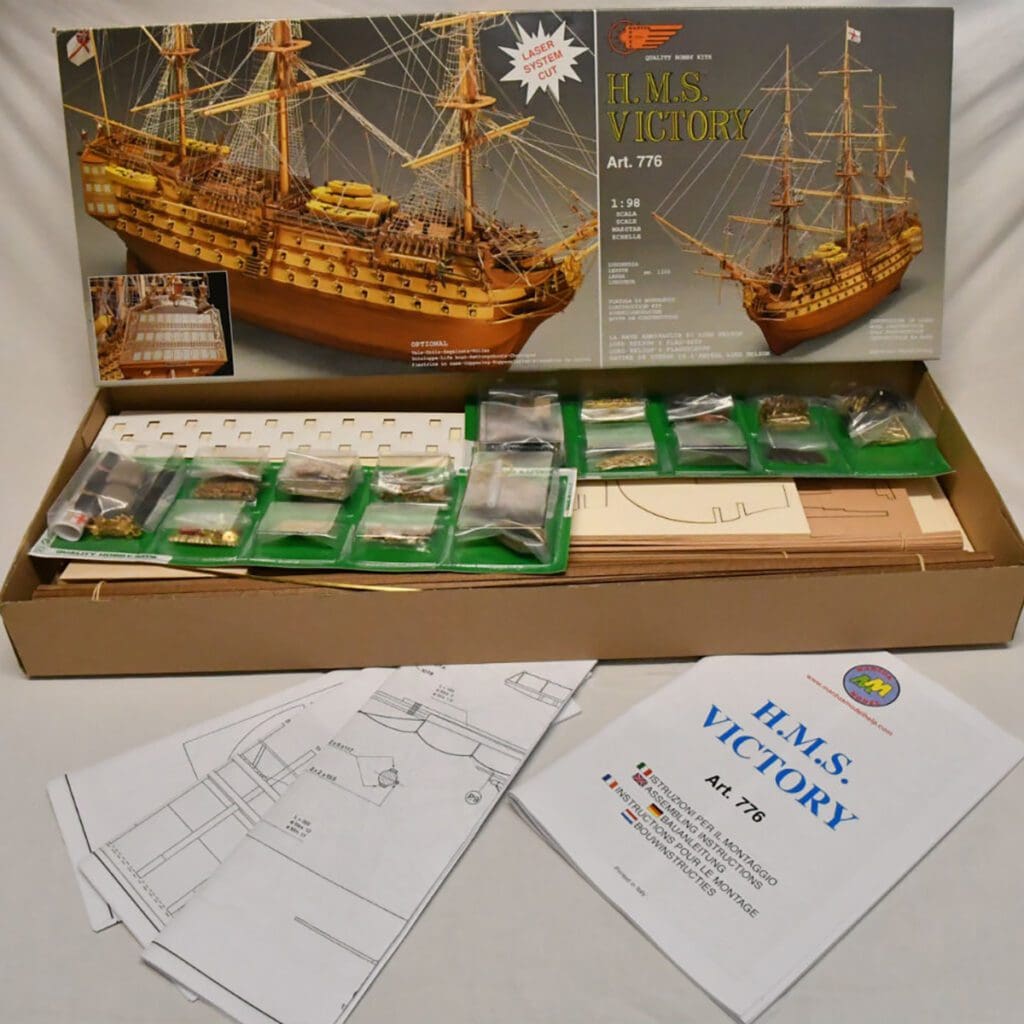
The construction drawing in the box, in English and Italian, helps the work step by step.
The exact dimensions are ensured by the elements cut with laser technology.
The packaging does not contain paint, glue or tools.
- Ship history:
Length: 69.2 m
Spine length: 46.1 m
Width: 15.8 m
Diving depth: 6.5 m
Crew: 850 people
Rudder: 11 m long, 1.7 m wide
Armament: per deck, 30-30 cannons on 3 levels, 32, 24, 12 pounds (cannonball weight, 1 pound 0.54 kg). Quarter deck: 6 12-pounders In the stern: 2 12-pounder and 2 68-pounder mortars. Bow deck: 2 mortar guns. The cannons were capable of firing 500 kg iron balls at a distance of 1 nautical mile.
Sailing area: 5480 m2
Speed: max. 11 knots, average 6 knots (1 knot = 1.8 km/h)
Its construction cost was £63,176 3 shillings
It was built between 1759-1765 in Chatham, England, based on the designs of Sir Thomas Slade. Today, the ship is in dry dock in Portsmuth, England. Living Museum, the symbol of the British Navy (Royal Navy), the Battle of Trafalgar and Admiral Nelson’s memorial.
The ship’s career spanned four decades until Trafalgar. The battle meant immortality for the ship and heroic death for its commander.
On October 21, 1805, the English fleet led by Horatio Nelson faced the combined Spanish-Fancian fleet. The Napoleonic Wars had already been going on for 10 years. The battle marked a turning point and strengthened England’s dominance of the sea, which it held for a century.
Its dimensions approached the maximum possible that could be built from wood. More than 2,500 oak tree trunks were needed to make it.