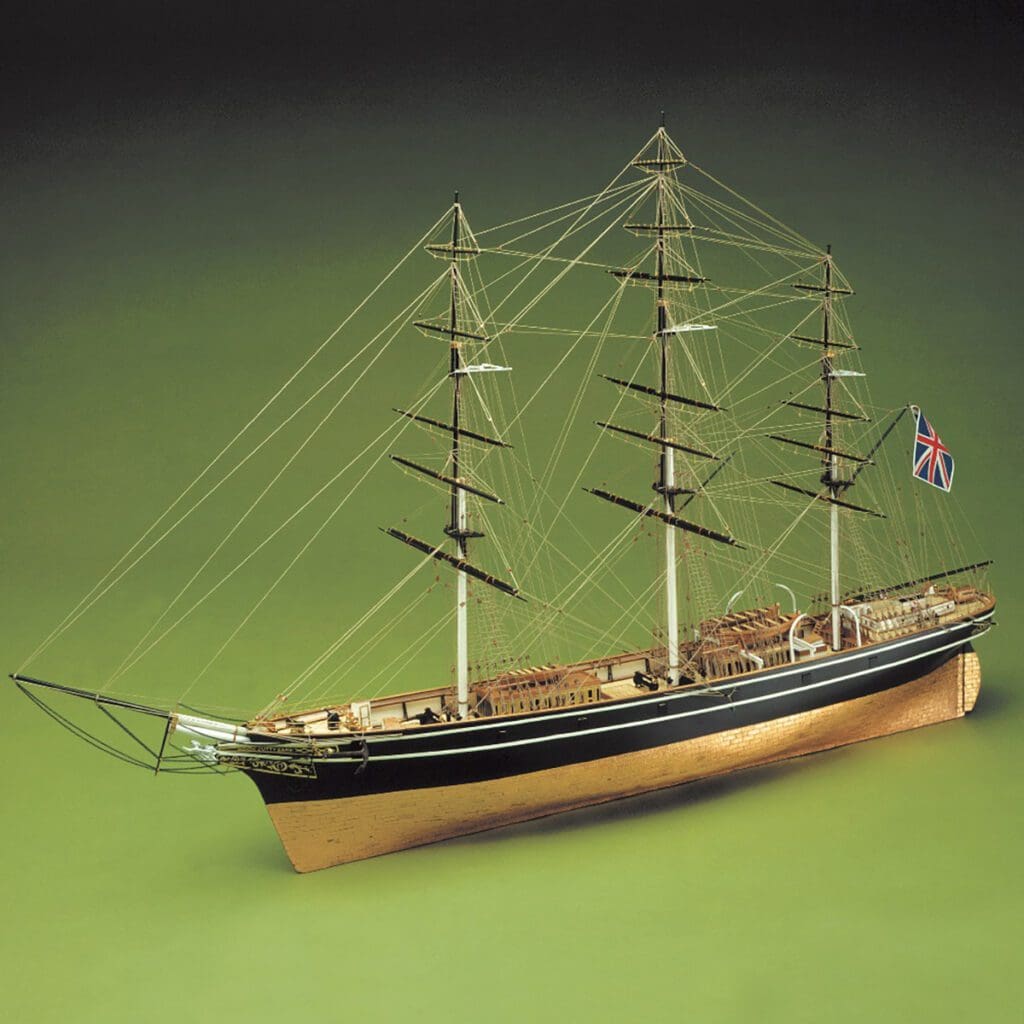
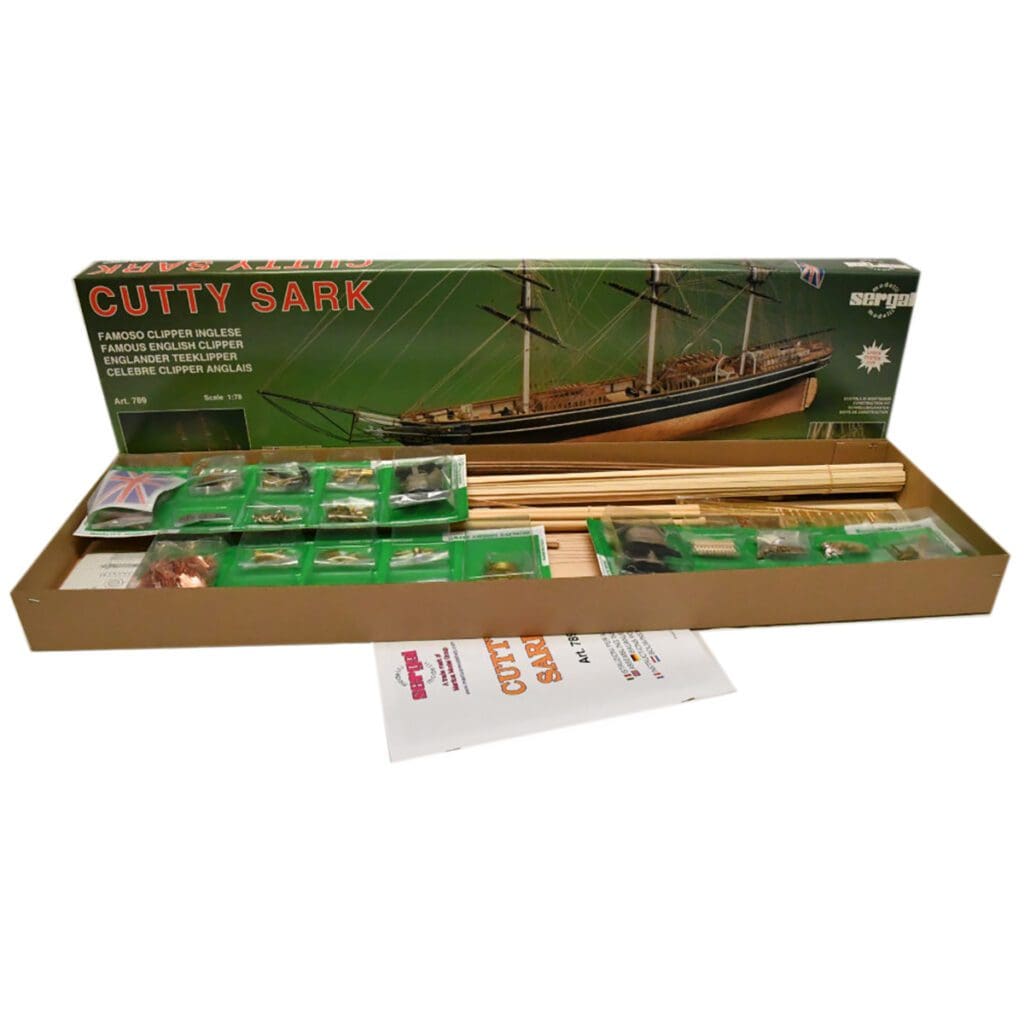
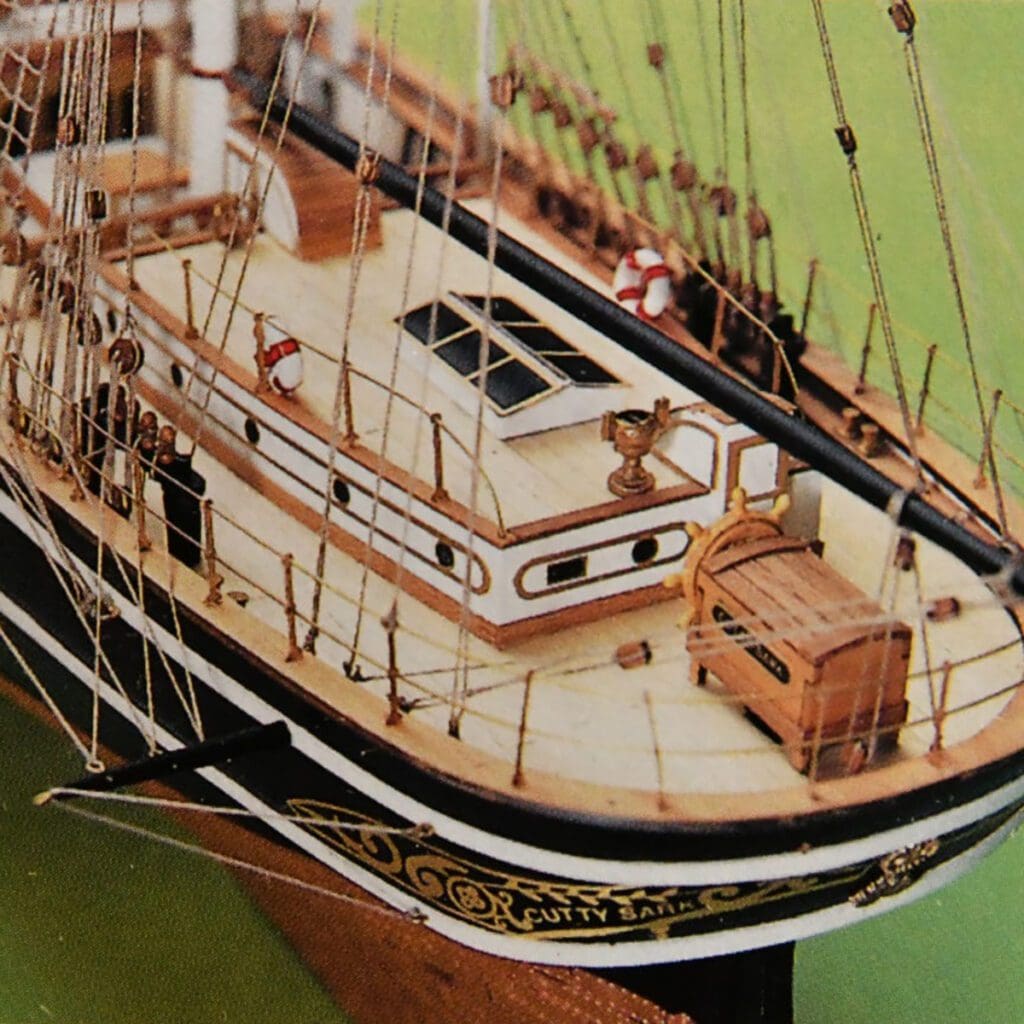
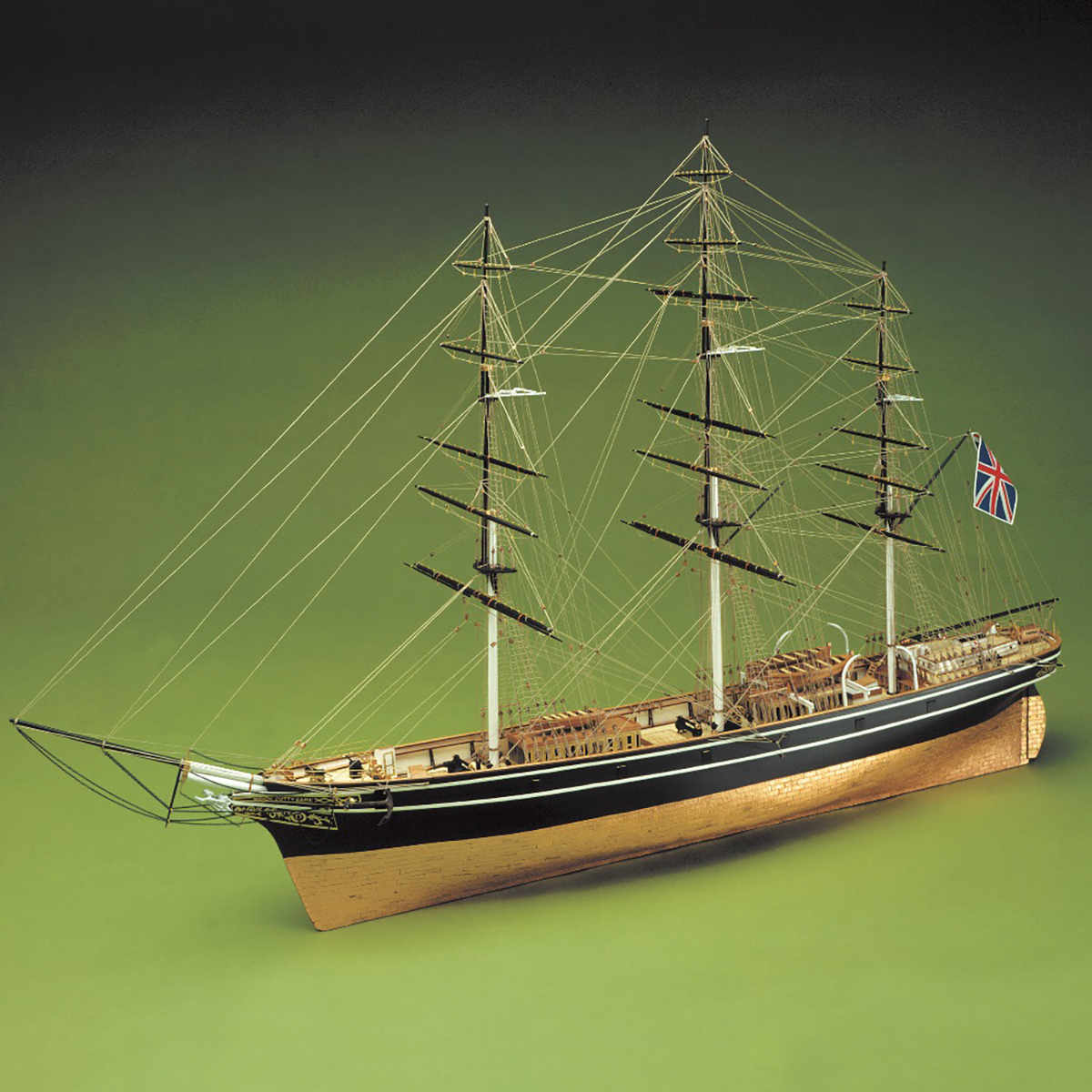
Cutty Sark Tea Clipper 1869
- Dimensions: 115 cm (length) × 16.5 cm (width) × 66 cm (height)
- Scale: 1:78
- Materials: wood, metal, canvas
- Difficulty:****
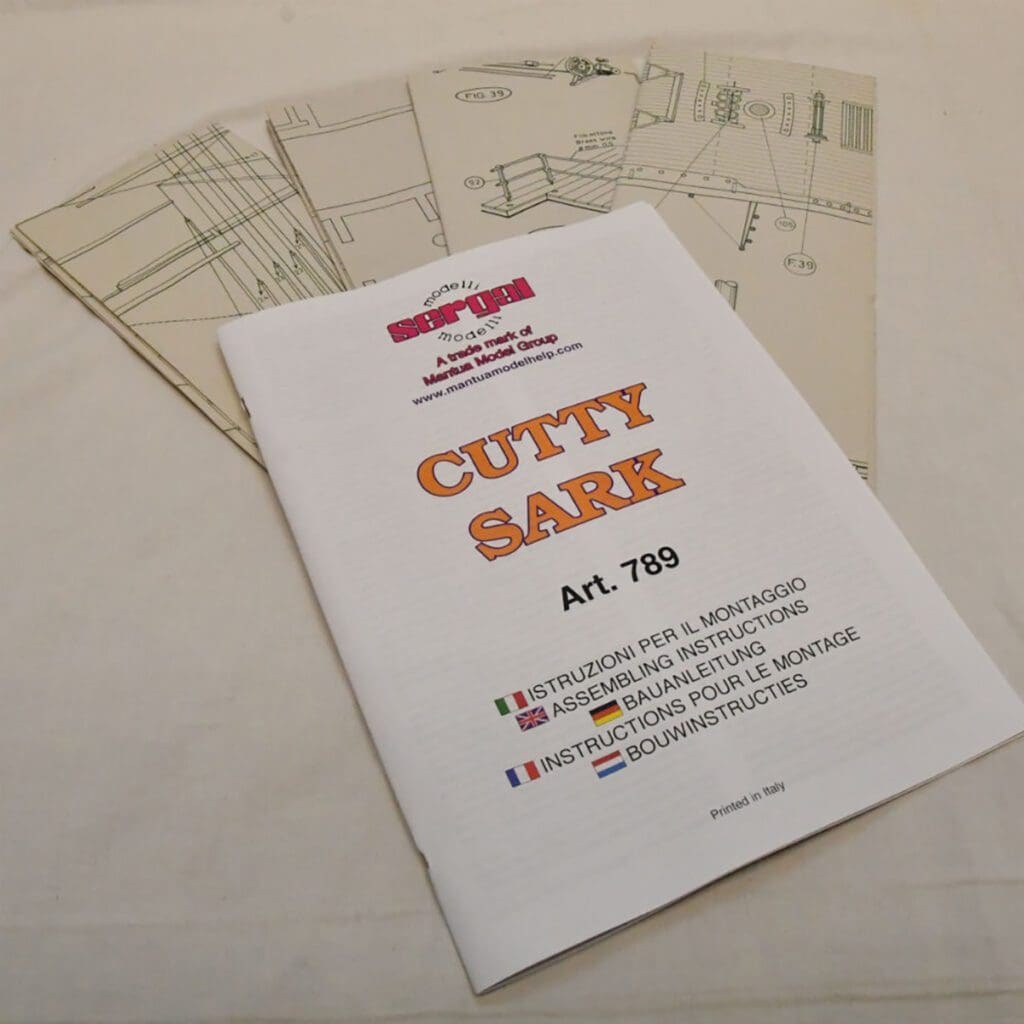
If you have already built a few models and are looking for a new challenge, this kit offers an opportunity to develop your ship modelling skills. The materials used in this wooden model largely match those of the original ship. The parts are assembled using glue and nails.The enclosed plans guide you through construction step by step in English and Italian.
Laser-cut parts ensure accurate dimensions.
Paint, glue and tools are not included.
- Ship history:
Total length: 85.4 m
Hull length: 64.7 m
Width: 11 m
Height: 64.8 m
Total weight: 978.5 tons
Diving depth: 6.4 m
Water displacement: 2133 tons
Speed: 17-18 knots
Sail surface: 3000 m2 (spread out would cover 11 tennis courts) The world heritage Cutty Sark is the only teak clipper left to us by posterity. It is one of the most famous sailing ships in the world, just like Admiral Nelson’s immortal sailing ship Victory. The approximately one thousand ton Cutty Sark was launched on November 23, 1869 in Scotland. The ship was designed by Hercules Linton in Dumbaton and commissioned by Jock Willis. The ship is named after the Scottish poet Robert Burns, Tam O’ Shanter. comes from his poem. The witch in the story wears a suggestive short shirt (Cutty Sark). This is where the name of the ship comes from, although no one understands exactly why… In the nineteenth century, the Cutty Sark – like so many of its companions – transported exotic goods to Britain from the most diverse colonial countries. A perfect example of English composite clippers. (Klippers were built with three masts and full sails. It was not uncommon for a clipper to be equipped with as many as fifty sails.) In its heyday, it was the fastest of all clippers. The Cutty Sark was specifically intended as a fast sailing vessel, to serve the ever-growing – and highly profitable – tea shipping competition. In the tea trade, the crew’s reputation depended on which ship returned from China to London with the first shipment of the new season. Speed mattered a lot between China and England, as the ship that arrived received a special reward, in addition to gaining a great advantage in the tea trade. Clippers were later pushed out of trade by steamships when the Suez Canal was opened. The nearly 3-4 month voyage was thus reduced to 60 days. The Suez Canal gave steamers a huge advantage, as they could travel the much shorter route in a shorter time, while sailing ships still had to go around the Cape of Good Hope. His glorious period – after eight years of transporting tea and five years of carrying coal – may have occurred when our hero was appointed to the Australian wool trade. It broke speed records year after year, which was made possible by the specially curved, narrow shape of the hull and the extremely large sail area. One of the best examples of this is that in 1883 he made his first journey from Sydney to London in 82 days, setting a record. He cut this to 73 days in 1885. He left eight clippers, including his great opponent Thermopylae, behind him, and the British clipper took sweet revenge on all the winning steamers when, under full sail, at a speed of 18 knots, he overtook the Sydney-bound steamer Britannia. By the end of the century, sails were forced to give way to steamers. Most sailing ships – including klippers – had a surprisingly short average lifespan, mostly only ten years. Many ships were lost there in sea accidents, and others were destroyed in fires. With the advent of steamships, many of them were downgraded to transport goods with lower freight rates. The last -survivors- lived out their final days as floating storage or served as coaling ships for the triumphant steamers. However, Cutty Sark had a very different fate. After serving for many years under the Portuguese flag, Wilfred Dowman, a high-ranking English naval officer who was fond of sailing, bought her back in 1922 and operated her as a training ship after renovation. Only later, in 1954 – after an enviable 84 years of service – did it take its place in London, in the Greenwich dry dock, as part of the National Maritime Museum. On May 21, 2007, the aging clipper almost perished in a fire caused by a vacuum cleaner left on board. Luckily, the Cutty Sark was undergoing restoration work, so the bulk of priceless objects in the belly of the ship, as well as the masts, the steering wheel and the famous bow ornament were no longer on board. However, the fire added ten million pounds to the £25 million cost of the renovation. The hull was badly damaged in the fire and was restored and reopened in 2012The famous tea clipper schooner, with its streamlined shape and many sails, is a unique ship that is a staple for every ship model collector and modeler. The Sergal Kit of the Cutty Sark Features: A double plank on frame hull construction, building plans with general details, English instructions, lost wax brass castings walnut and lime planking, wooden masts and spars, brass and walnut fittings, etched brass details, rigging cord, copper plates for the hull, and silk flag. All sheet ply sections are Laser cut for accuracy.
Sorry, no reviews match your current selections