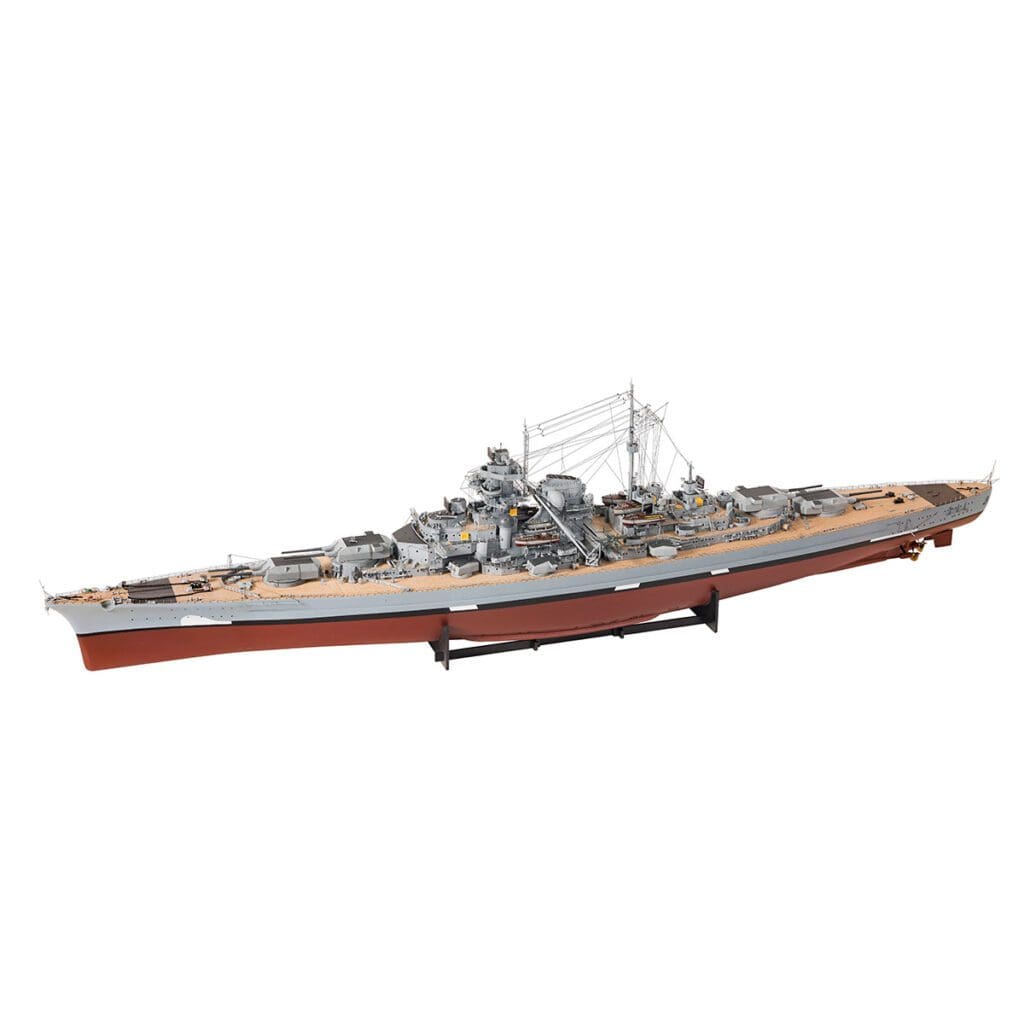
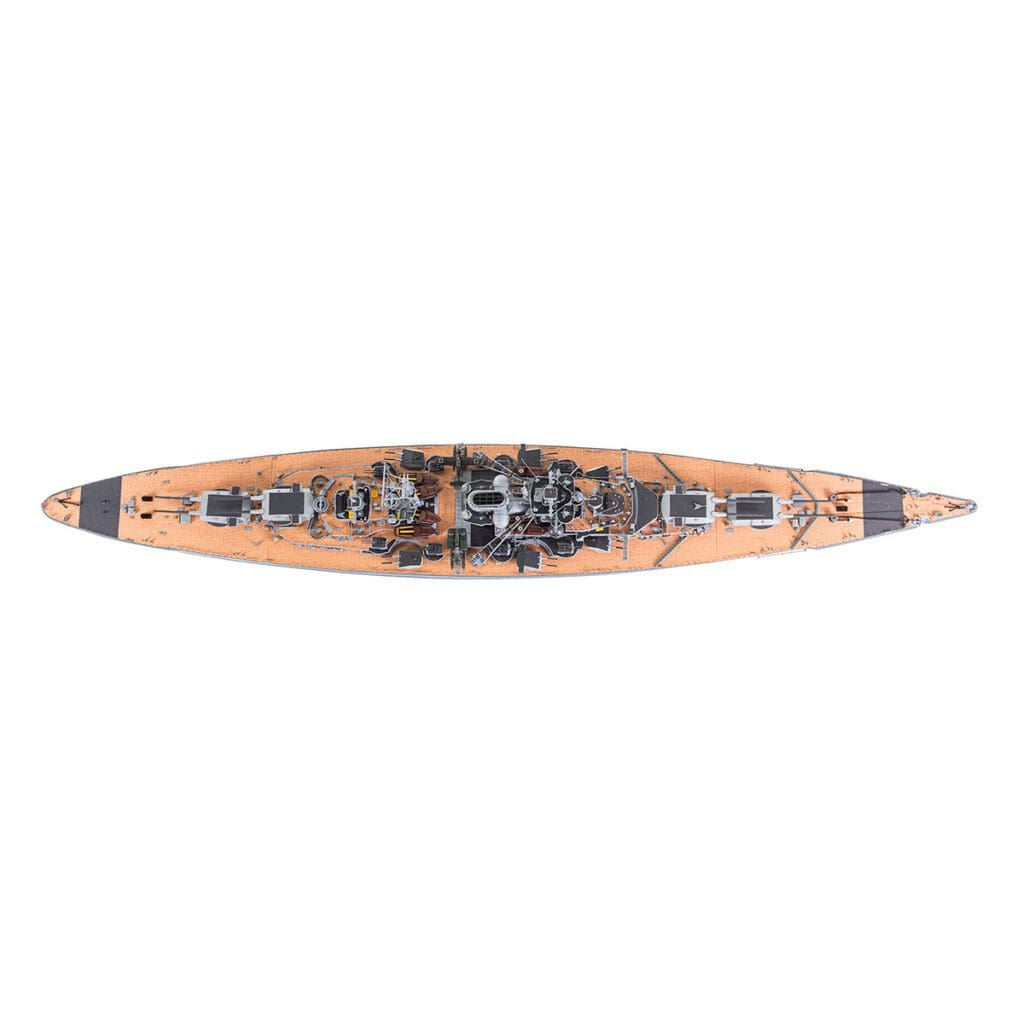
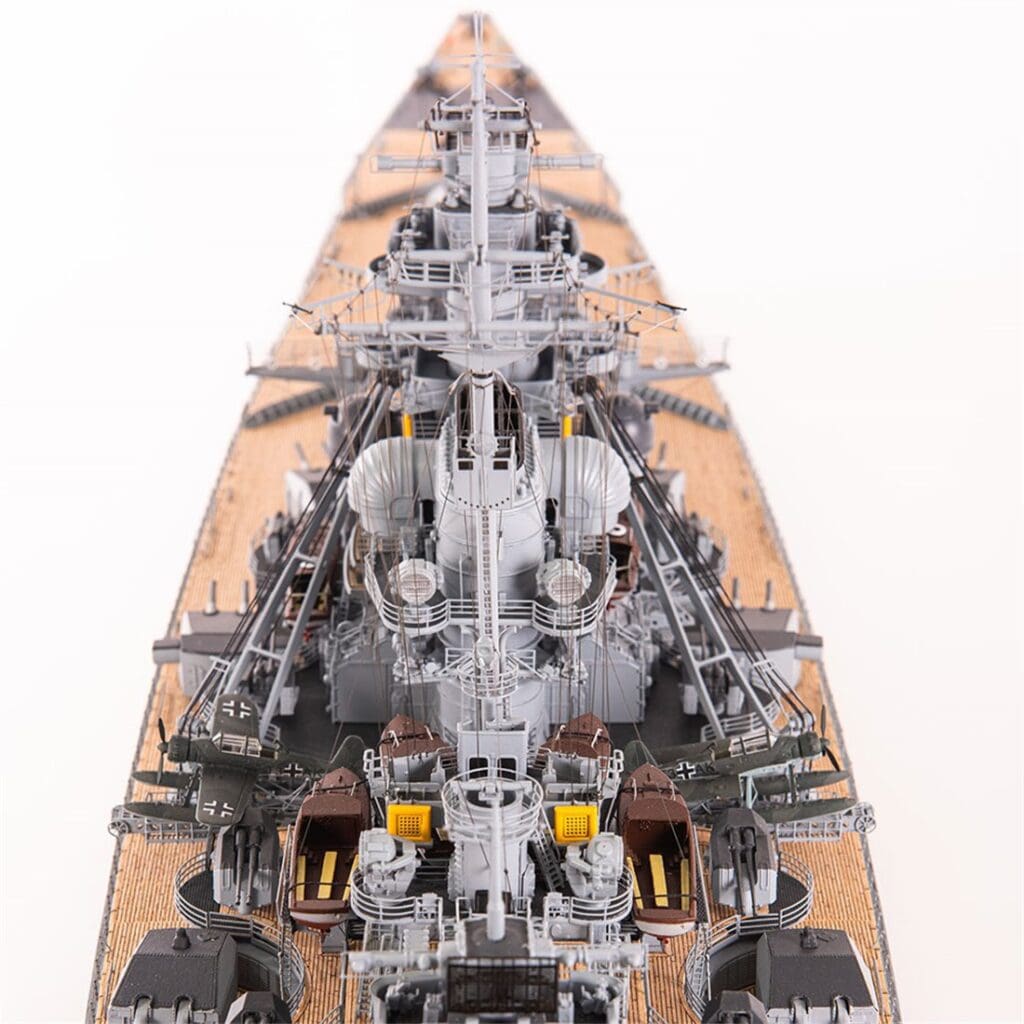
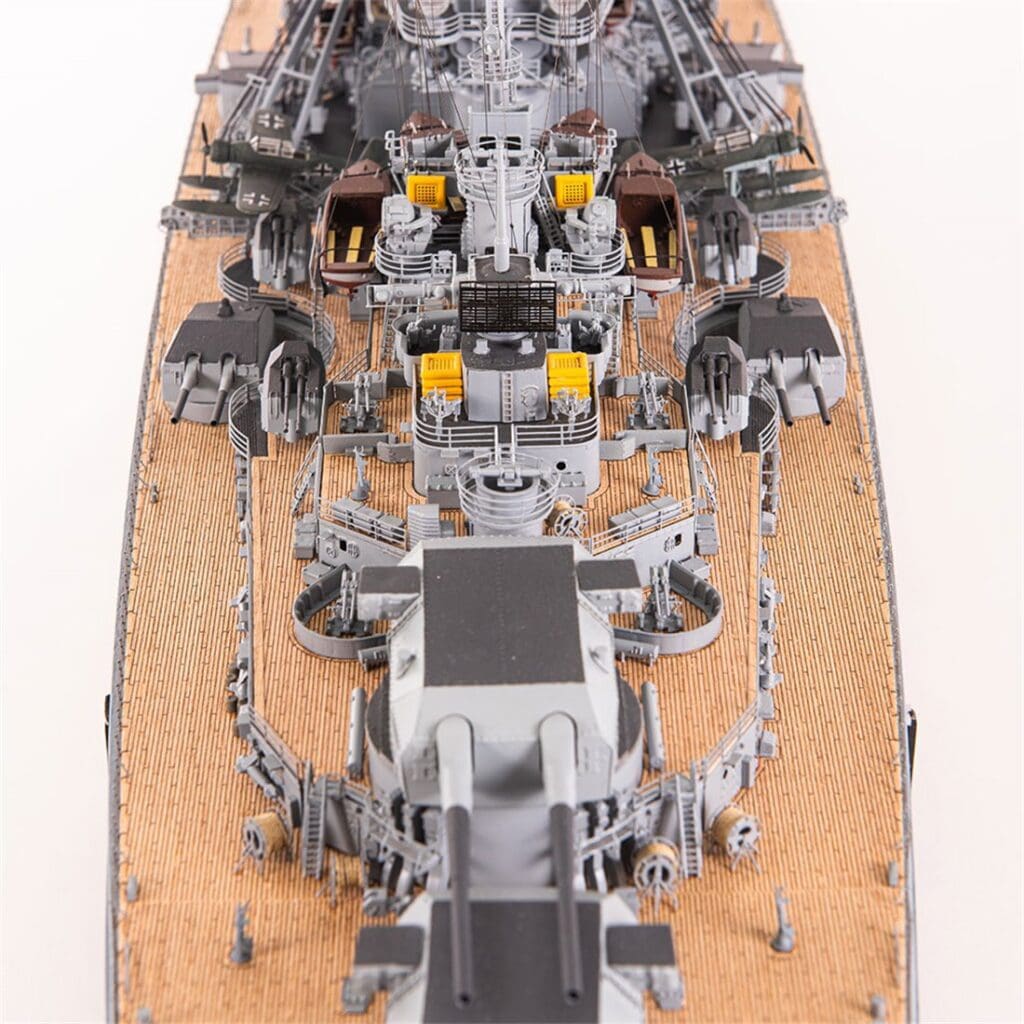
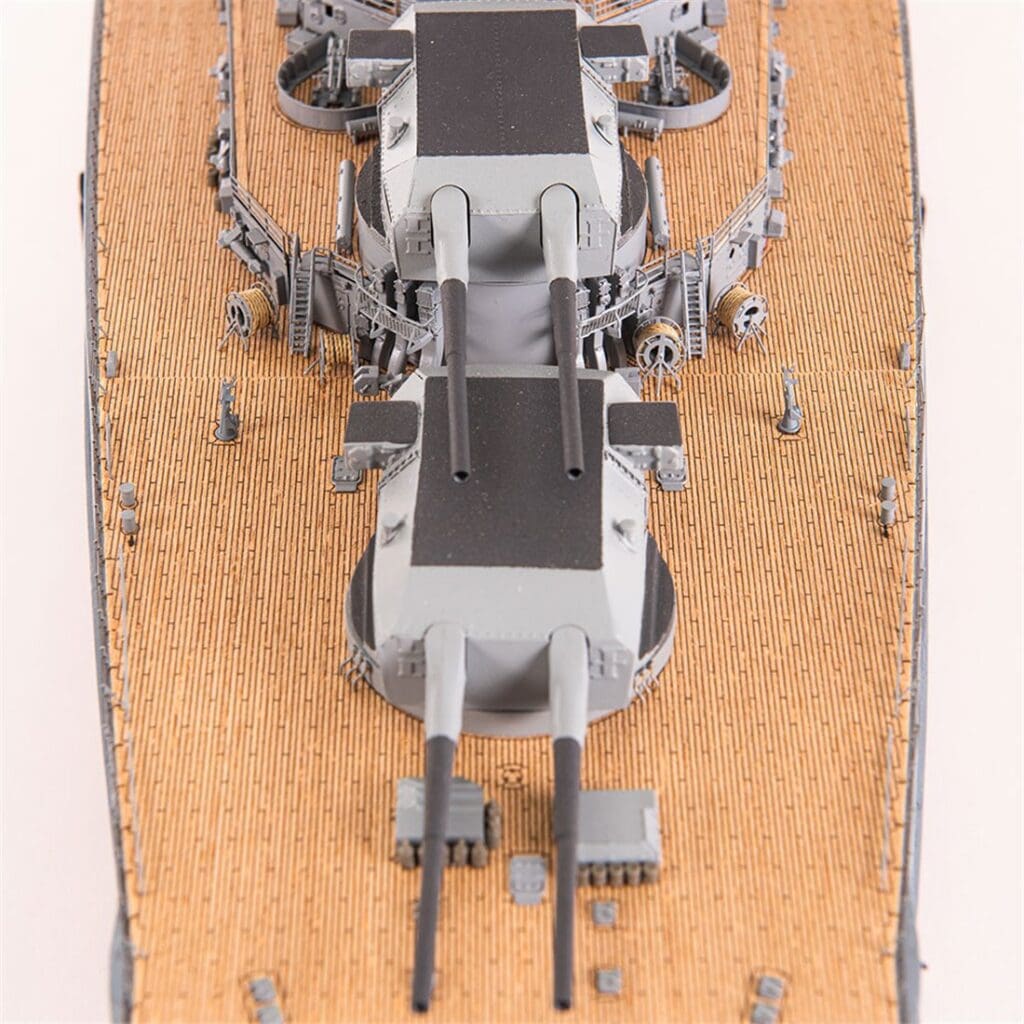
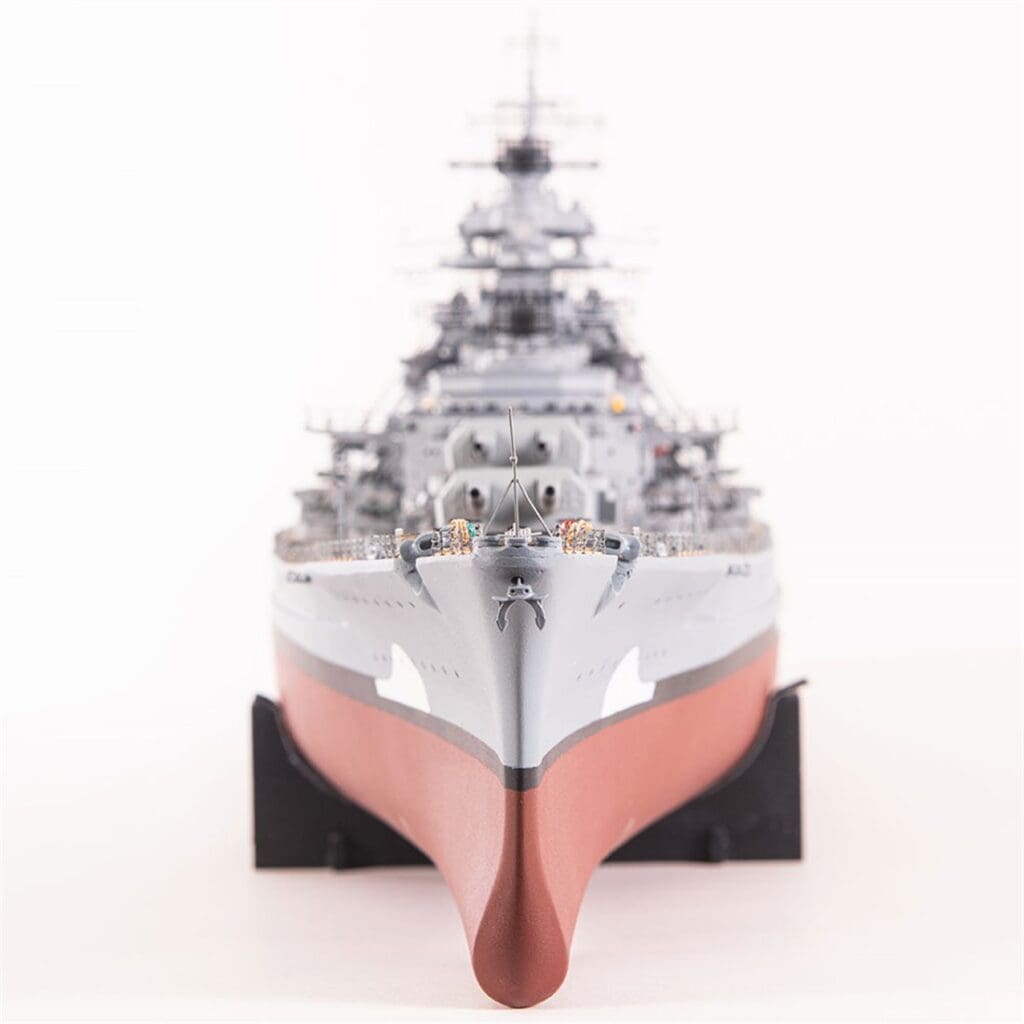
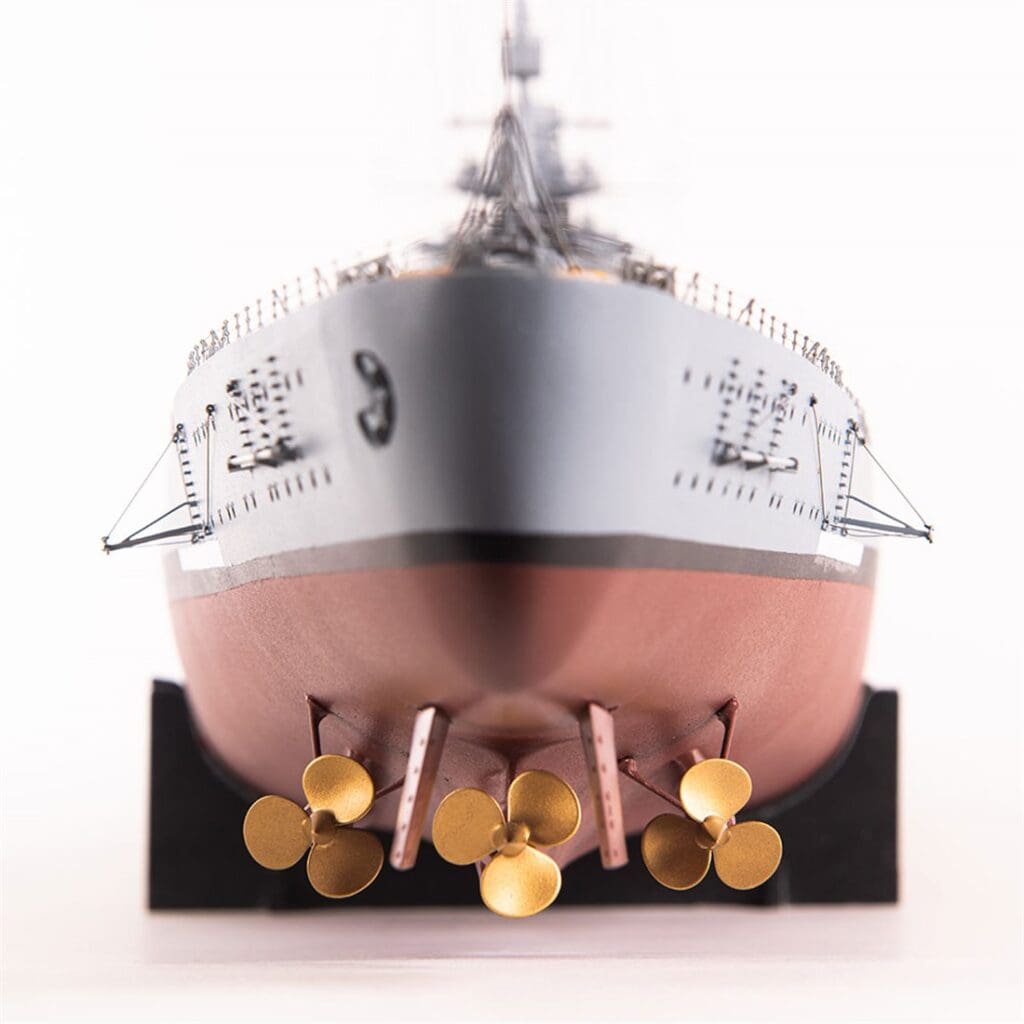
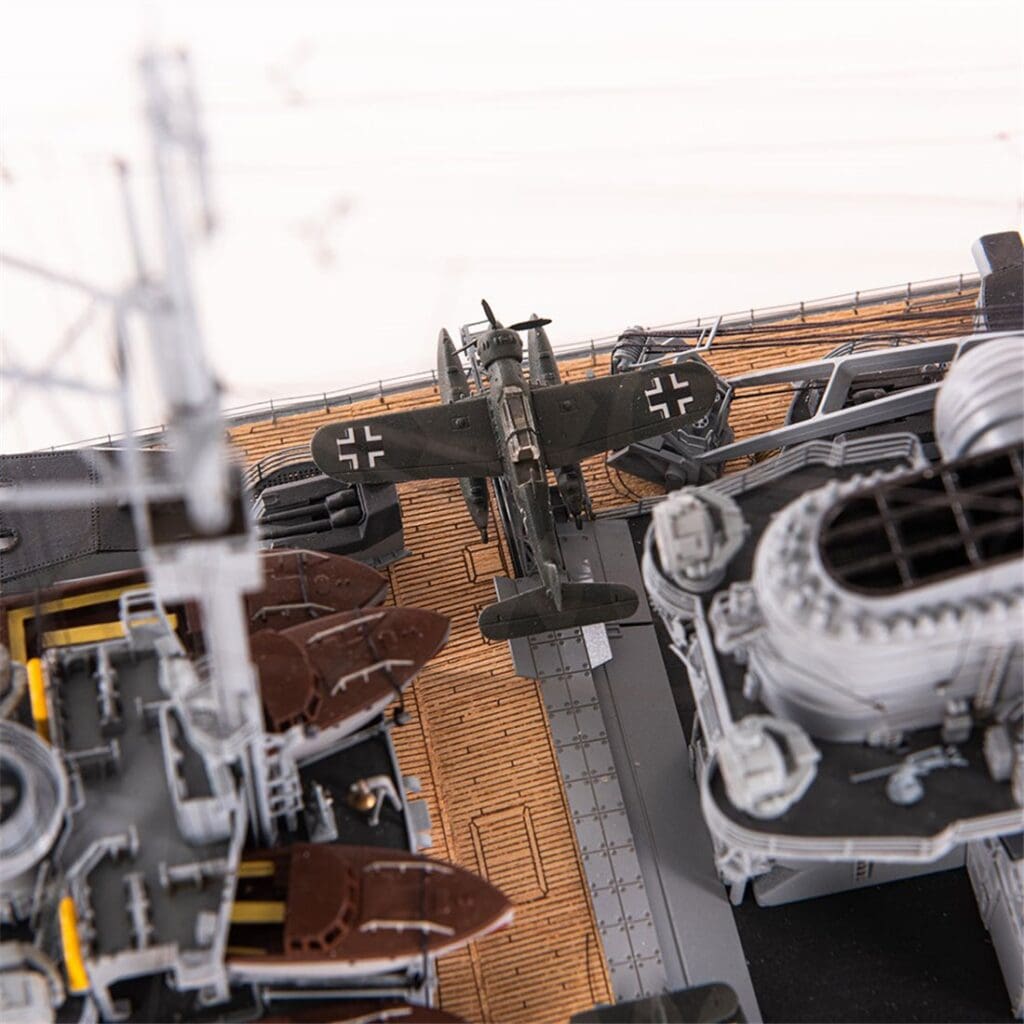
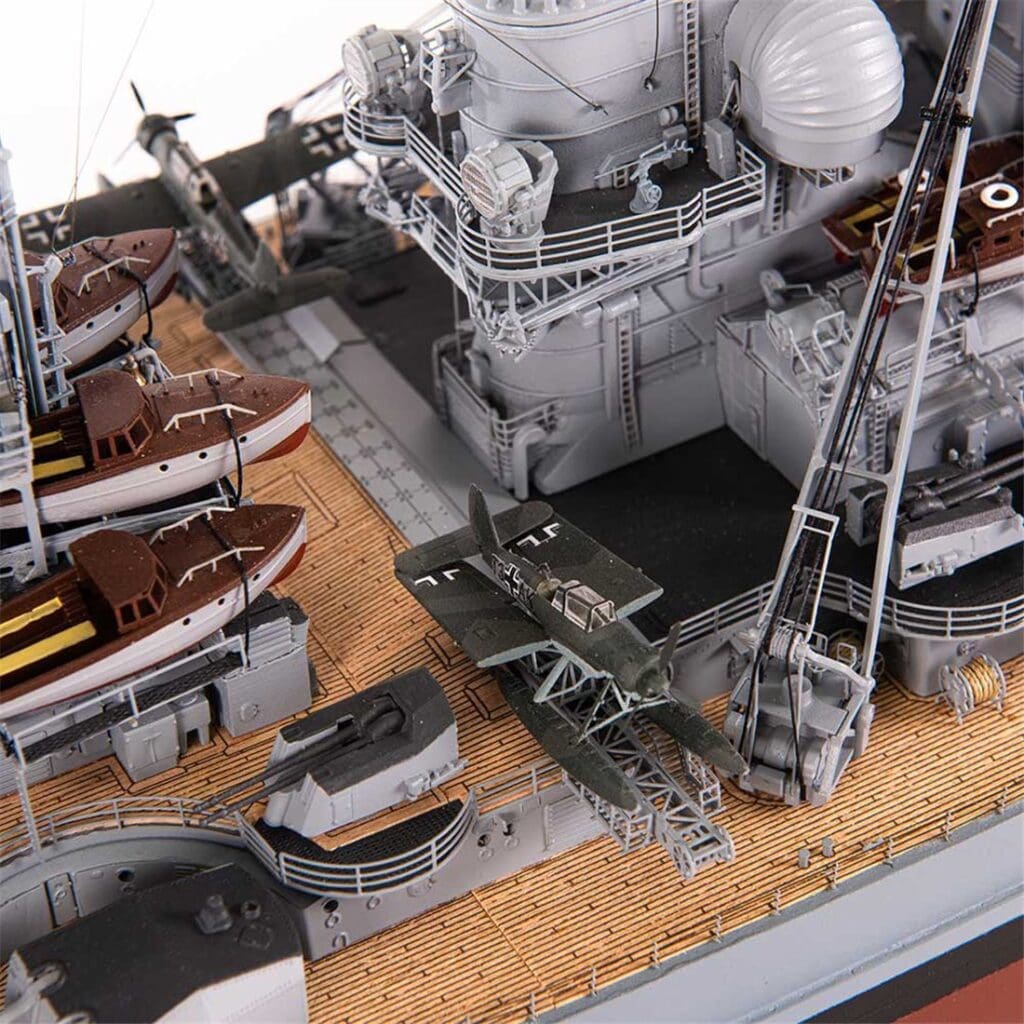
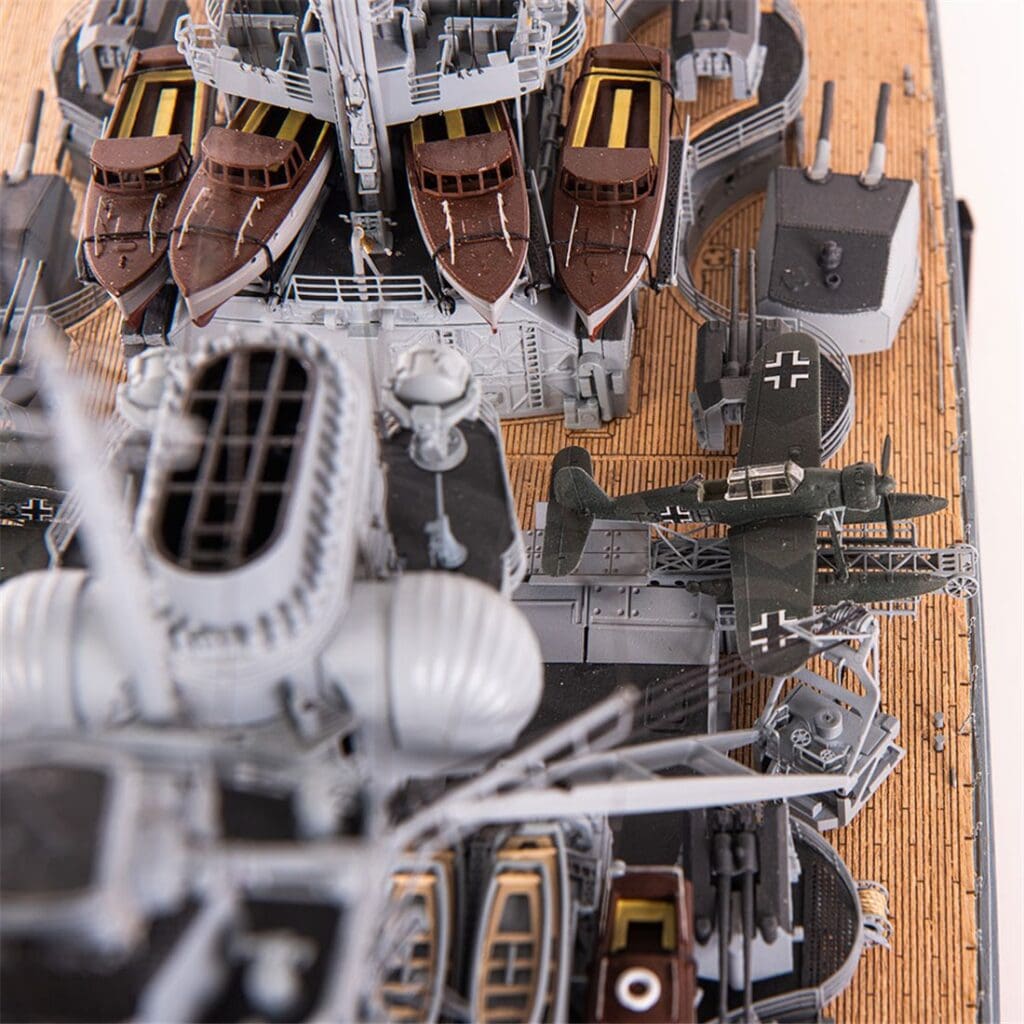
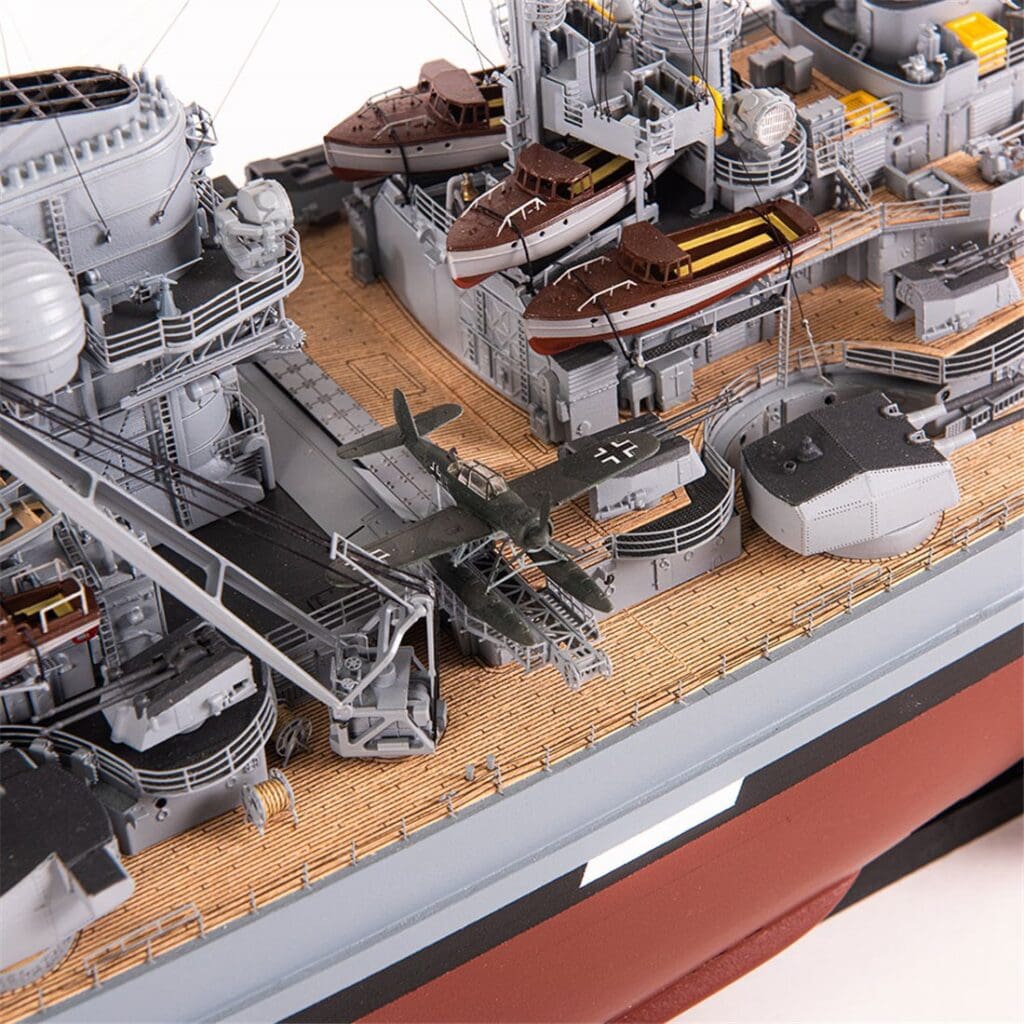
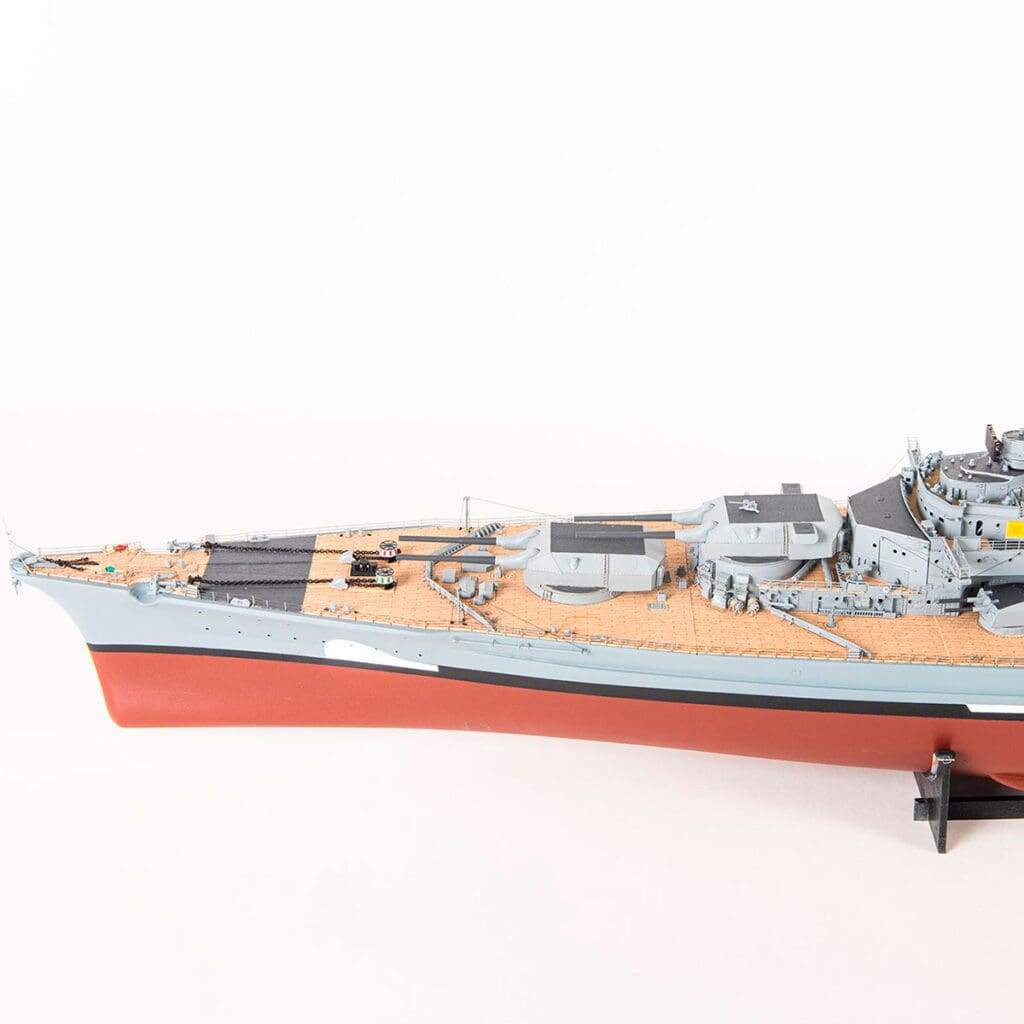
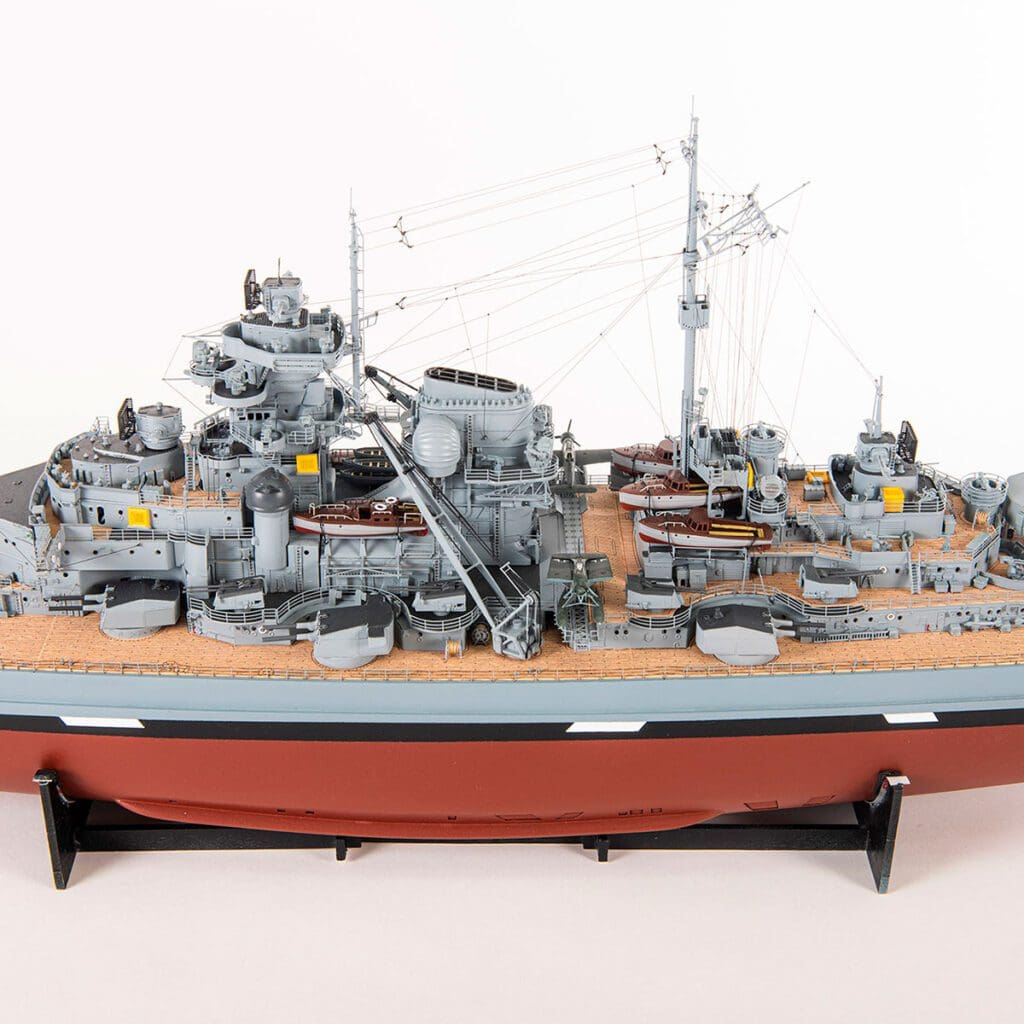
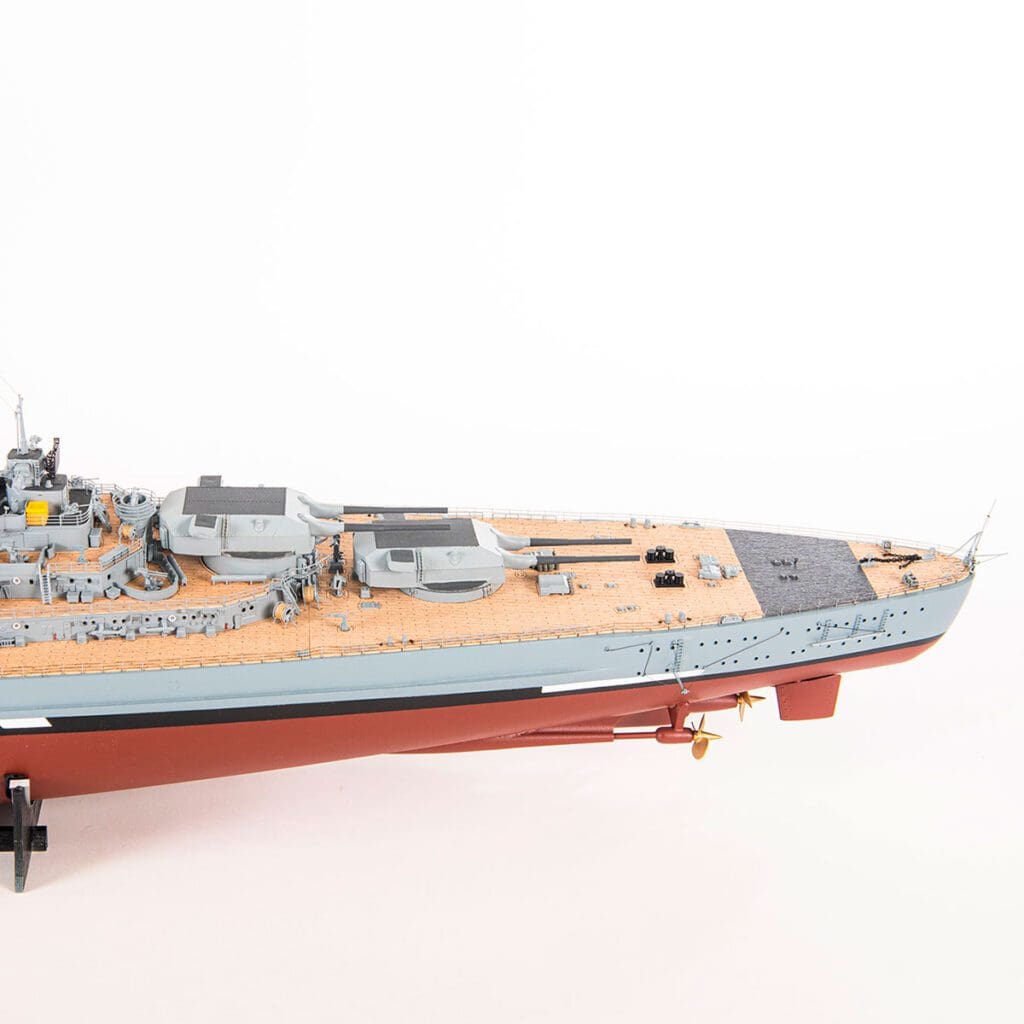
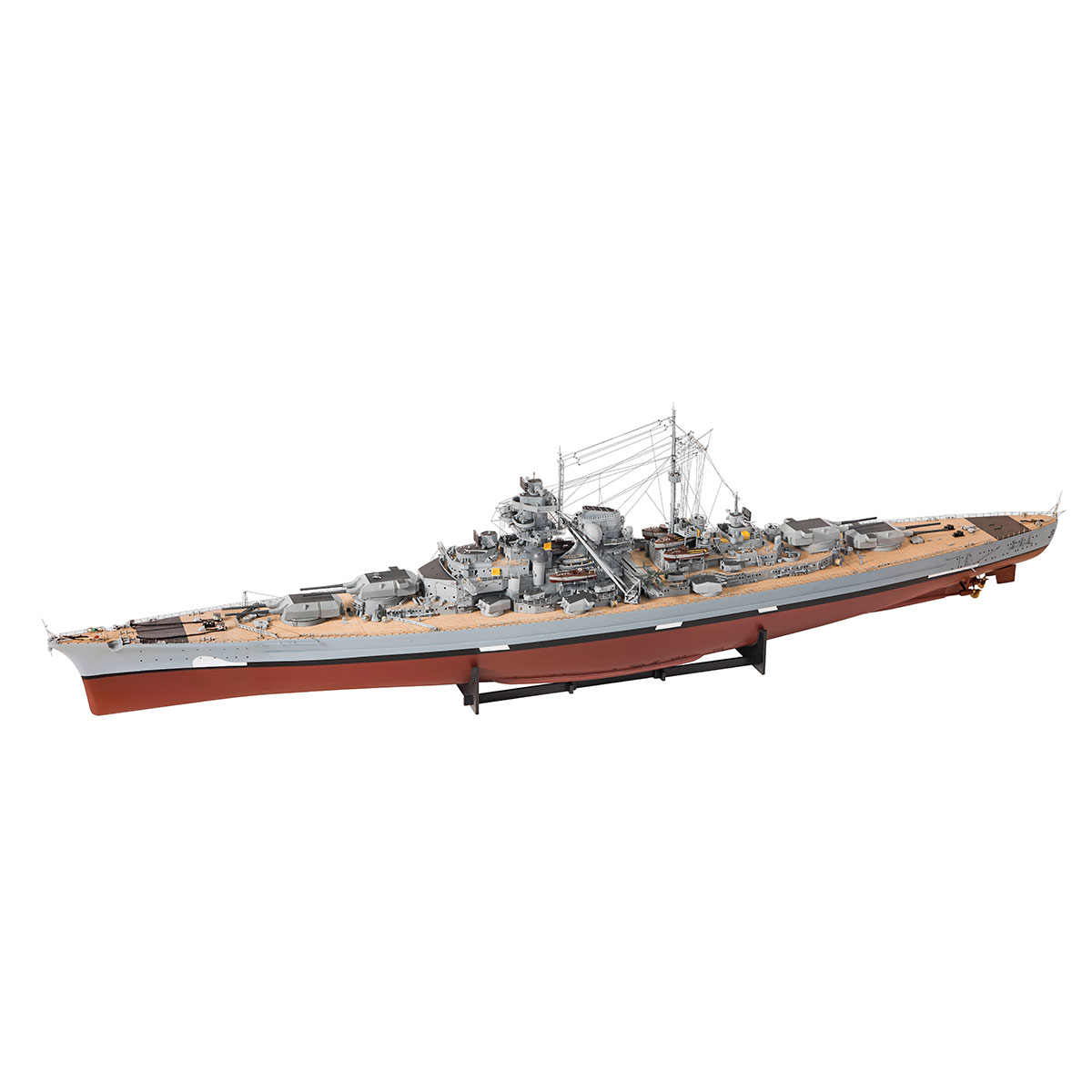
Bismarck battleship
– Amati Kit –
Dimensions: 127 × 18.2 × 29.2 cm (length × width × height)
Scale: 1:200
Materials: wood, metal
Difficulty: ****
Product description:
If you have already built a few models and are looking for a new challenge, this kit offers an opportunity to develop your model building skills. The materials used in this wooden model largely match those of the original stagecoach. The parts are assembled using glue and nails.
The plans supplied in the box guide you through construction step by step in English and Italian.
Laser-cut parts ensure accurate dimensions.
Paint, glue and tools are not included.
Related products:
Plank-bending pliers
Electric plank bender
Pin pusher
Stand
Ship history
Bismarck was a German battleship of the Second World War, named in honour of the 19th-century chancellor Otto von Bismarck (1815–1898). She is famous for sinking Hood and for the subsequent pursuit that led to her destruction. She was the lead ship of the Bismarck class; Tirpitz was the only other ship of the class.
Bismarck was launched in Hamburg on 14 February 1939 in the presence of Hitler, Raeder, Keitel, Göring, Goebbels, Hess, Ribbentrop, Himmler, Bormann and von Schirach, underscoring the importance attached to the event.
Under the command of Ernst Lindemann, she began sea trials in the Baltic. In March 1941, she conducted gunnery trials at Gotenhafen and then began joint training with the heavy cruiser Prinz Eugen.
Admiral Raeder, commander of the OKM (Oberkommando der Marine), decided to use Bismarck to protect surface ships from intervention by British battleships and to attack merchant vessels supplying Britain. In early April, she was ordered to the Atlantic to join Gneisenau in attacks on shipping bound for Britain. This was precisely what the British Admiralty had long feared. Operation Rheinübung posed a potentially enormous threat to merchant shipping, the lifeline sustaining Britain while it was isolated from continental Europe. Admiral Günther Lütjens was appointed commander of the naval group.